Proper on-page optimisation directly affects a website's success, because it determines how convenient the site is for users. Overly complex navigation and a poor structure will make visitors leave your website.
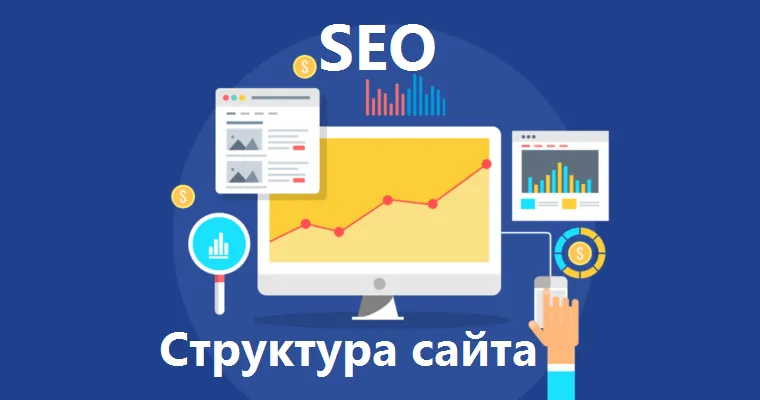
SEO is directly linked to website structure
Even how effective SEO will be depends on the right structure. If it's done wrong, promotion becomes much harder. That's why it's so important to analyse how each section is placed. The website must meet the needs of both users and search engines. Structure is the scheme that defines where sections, products, categories and so on are located. In essence, it's a set of URLs linked in a certain way. Site structure is directly tied to your keyword research, which determines the sections the site must have. Building a website should start with keyword research.
To make it clearer, think of a supermarket. You expect to find a product in the section set aside for it. Nobody wants to spend ages looking for bread in the household chemicals aisle. Website structure works the same way. If done right, search engines will even index the site faster, since they use the site's links to do so. The more confusing the structure, the worse the rankings. If everything is right, your site will be indexed the very next day. Internal linking also affects rankings.
Proper on-page SEO
On-page website optimisation also involves distributing link weight within the site. If done incorrectly, the search engine will consider those pages low-quality and may rank them lower. Weight is distributed according to how important the page is to users.
Keep in mind that search engines also assess how users feel about your website. If people close it quickly, the search bot will consider it unreliable. The more time users spend there, the more attractive the site is to search engines. A clear, simple structure improves average engagement metrics. If a user places an order, the search engine will notice and raise your rating. That's why it's so important to prevent any difficulties while using the site.
On-page optimisation: the best for users
Information should be presented as simply as possible, and each step should gently nudge the user towards the next action. In other words, everything should be logical and consistent. If the website isn't delivering results, you need an SEO audit. It's important to split all information into levels: the first is the home page and main categories, the second is subcategories. If everything is built correctly, a potential customer can find the product they need in a few clicks.
Information can also be arranged alphabetically. This is usually used for online dictionaries or encyclopaedias, but it can work for other sites too. Keep in mind, though, that customers may struggle, since they need to know the product's exact name to find it. Audience-oriented organisation is one of the most popular options. It meets the needs of different target audience groups, makes the site as convenient as possible and increases the time people spend on it. You can even use different designs for different audience needs.
These are just a few options — there are countless others. Choosing the right one takes specialists' experience and knowledge, plus a detailed preliminary analysis of both your needs and your potential customers' interests.