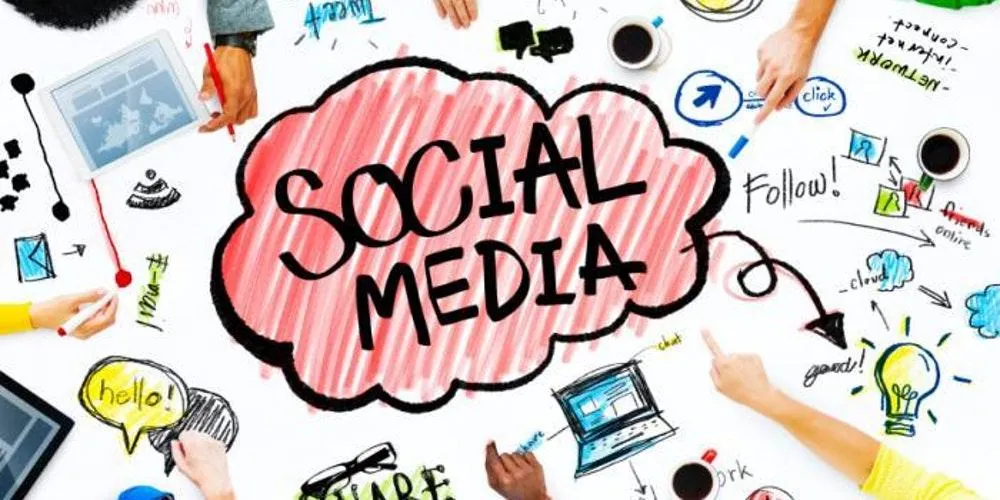
More than 75% of internet users have social media profiles, where they spend 2–4 hours a day. Where people once mainly chatted on social networks, they now look for useful information and buy and sell goods and services. There are several social media promotion channels that help attract your target audience's attention:
— publishing quality content;
— posting regularly;
— using recommendations;
— engaging with followers;
— providing feedback;
— using advertising channels;
— running giveaways;
— sharing industry news;
— telling people about your products' benefits;
— creating media content.
These activities help you attract as many customers as possible and increase brand awareness. Let's look at each method in more detail.
Content
Most SEO specialists have long agreed that content is the fundamental factor for growing a business online. Even lots of advertising won't bring potential customers to your page if there's little information on it or it's boring.
Several SMM requirements define quality content that appeals to your audience:
1. Uniqueness. Every news item or article should be unique, not copied from other sites. If information is repeated across several platforms, users get a sense of déjà vu and your offer no longer feels unique. Ultimately this leads to the logical question: "Why should I buy here if I can go to the shop next door?"
2. Relevance. Analyse topics that matter to users and keep your feed timely. For example, if you have a hot special offer, publish it the day before it starts, not 2–3 weeks earlier.
3. Substance. The more interesting your posts, the wider the audience you'll reach. Tell readers interesting facts about your products and their history, show what goes on behind the scenes. All this sparks customers' interest and boosts your expertise, increasing followers' loyalty.
4. Emotion. The more your content is filled with the author's emotion, the more appealing it looks. But don't repeat in every post that "our company is the best in the world!". To boost engagement, post short quizzes, polls, contests or just funny illustrations. That way users won't feel something is being pushed on them.
Regular posting
To publish on time and regularly, draw up a content plan in advance. It should include the number of posts, topics and posting frequency. This lets you build a brand strategy and stick to it long-term without dropping out of your audience's sight. The optimal posting frequency varies by industry. For retail, 2–3 promotional posts a week is optimal. For the beauty industry that's not enough: daily posts work better.
Shares
Attracting customers through recommendations is the most effective method. People tend to trust recommendations more than their own experience. That's why shares, as a promotion tool, have a significant impact on audiences. Your content can be shared by a community or by an individual. You can also create a special hashtag that groups, for example, your posts or customer reviews.
Attention to your audience
For successful SMM, it's important to build effective engagement with group members or followers. Encourage them to discuss, comment, like and share. Get them talking with you and with each other. Active community engagement increases brand awareness and loyalty and attracts new followers.
Feedback
Reviews of a product or service shape potential customers' desire (or lack of it) to use your offer. Buyers usually describe not only the product but also how they felt about the purchase. Reviews can be positive or negative, but both can benefit you. Work on your reputation, take criticism calmly and thank satisfied customers.
Try to pay attention to everyone, whatever the review. A grateful customer will come back, and an unhappy one will be satisfied that their problem was noticed and resolved. If you handle negativity and objections well, your company will not only keep its reputation but also prove itself a reliable, responsible partner.
Advertising
There are 2 ways to increase traffic on social media:
1. Targeted advertising. The most popular and effective way to promote products on social media, letting you reach exactly your target audience. You can choose it yourself by various criteria: gender, age, location, etc. Usually commercial content is published that shows the company in a good light and explains what makes your offer unique. Facebook is an example of well-configured targeted advertising.
2. Advertising in groups or popular accounts. This is quite an effective way to get noticed, but you'll first need to study the audience your ad will reach carefully. Some influencers and communities have a very specific audience. Pages of celebrities or popular bloggers are often used for advertising. This practice is widespread on Instagram.
Giveaways
To draw users' attention to your company's website or community, run contests with free gifts or discounts. There are several types of contests:
— Gift for a share. Followers who share the promotional post on their page take part in the prize draw.
— Creative contest. There are many options: participants draw a picture, sing a song or record a video.
— Photo gallery. To take part, people take a photo with the product and post it on their page with the contest hashtag.
Giveaways attract lots of new followers and boost engagement, but there's a risk of attracting freebie hunters.
The benefits of your products
Talking about the benefits of your products, their materials and ingredients increases potential customers' trust. Describe in detail how useful the product is, where it can be used, how safe its composition is and what buyers gain. This way followers will trust your company and expertise, and brand loyalty will grow.
Industry news
News from your industry makes interesting content for followers. You'll come across as an expert, lifting the curtain on what happens behind the scenes, and provide information they're unlikely to look for themselves. This is especially useful for a personal brand, as it shows your professional growth and self-improvement.
Video
Audiences respond quite well to videos, even when they're promotional. Media content is often hosted on the company website or a video platform, with links shared on social media. Many brands have already started promoting themselves on YouTube with their own channel. This attracts a lot of people and, combined with promotion on other social networks, makes a brand recognisable and successful.