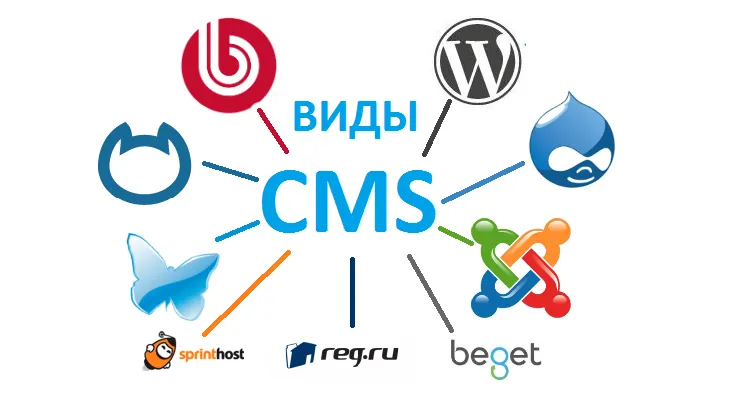
A CMS is a tool that makes managing a website easier. With it, you can fully manage your content.
The benefits of WordPress and similar CMSs
Modern content management systems let you do much more than you might imagine. A CMS lets you not only edit content but also create it, using visual editors that are very easy to learn.
Many people confuse these systems with website builders. Remember: builders let you create websites even without experience, but you have limited control over what your site can do. A CMS is harder to use without the right knowledge, but you get a huge choice of tools for building truly high-quality websites.
Many still think a CMS is only suitable for a personal blog. That's indeed what they were originally created for, but that's in the past. Today most systems are easy to customise. For example, WordPress now powers around 30% of the web. So a WordPress site suits not just a blog but a business too. We hope you now have a clear idea of what a CMS is.
Now let's look at what the system does:
- Managing new content.
- Creating categories and subcategories to structure all the information.
- Editing pages.
- Customising pages.
WordPress development and beyond
Now let's talk about which CMSs are the most effective and popular today. First, what WordPress development offers. You've probably heard of it. Its main features:
publishing and content management rules are intuitive;
a built-in editor for quick content editing;
a huge number of plugins to extend its capabilities;
a strong community.
WordPress websites are among the most popular today. But there's a significant downside: you'll need to install many plugins and manoeuvre skilfully to add the specific features your site needs.
There are also Joomla websites. Joomla offers:
- Strong support for custom post types.
- More advanced user management.
- Multilingual support.
- The ability to use unique templates for individual pages.
But this system isn't as convenient or clear for beginners as WordPress, so you'll need more time to learn it. In return, you can build more complex projects — Joomla's capabilities are impressive. This CMS is a good fit if you need an online store. It suits those with development experience, as some features have to be configured manually.
Drupal development has many fans. The system handles custom content types effectively, giving you better control over users.
Its main features:
- Easy management of user content.
- Simple user management.
- A detailed content taxonomy system.
- A high level of security.
Choosing a system is up to you. But don't take the decision lightly. Some choose ease of use, others want to build a more complex product and prioritise advanced settings. So to make the right decision for your business, it's best to test several systems.
Call us and our managers will advise you on any questions: +380 67 250 60 02 ☎